
Your first-gen strengths can show up in the small things you learn, try, and share. A strengths timeline helps you see them. Choose three real moments, name what you did, and connect each one to a skill you can use again.
First-Generation College Celebration takes place on and around November 8. The official celebration page explains how schools and communities honor first-gen students and families. This year, try a quiet activity you can keep, share, or build on.
You do not need a prize or a perfect grade to begin. A hobby, a class project, or a new task can give you a place to start. Your story is still growing.
What does first-gen mean?
First-gen is short for first-generation college student. It often means your parents did not finish a four-year college degree. However, schools and programs may use different rules. Check the FirstGen Forward student guide and ask the program if you are unsure.
The label describes part of your family’s college history. It does not measure your talent or your family’s wisdom. People who have not been to college can still teach you a great deal.
Also, first-gen students do not all have the same lives or skills. This activity helps you find your own examples. For a broader starting point, read our guide to celebrating your story and belonging.
Find your first-gen strengths in three real moments
First, draw three boxes on a page. Label them “a first try,” “a change,” and “a next step.” You can also type, make a voice note, or draw. Pick a format that works for you.
Think about one skill you have worked on. Maybe you learned a song, joined a game, made a bowl from clay, or spoke up in class. Choose moments that show what changed over time.
- A first try: What did you try before you knew how to do it?
- A change: What did you adjust after practice or feedback?
- A next step: How did you use what you learned?
Next, add a rough date or school year to each box. An exact date is not needed. Then write one action for each moment, such as “asked,” “tested,” “planned,” or “explained.”
If one skill does not fit all three boxes, use three separate moments. The goal is to notice growth. You are not trying to prove that your life follows a perfect path.
Name first-gen strengths with evidence
A strength is easier to explain when you can point to an action. Instead of writing “I am good at everything,” name one thing you did. Then choose a skill word that fits.
| What you did | A skill it may show | A detail to add |
|---|---|---|
| Tried a new way after a mistake | Problem-solving | What did you change? |
| Asked someone to explain a step | Seeking help | What question did you ask? |
| Helped a group divide its tasks | Teamwork | What was your own part? |
| Practiced a little each week | Persistence | What became easier? |
These are possible links, not a scorecard. You might choose a different word for the same action. Pick one that you can explain in plain language.
The National Association of Colleges and Employers includes teamwork and clear communication among useful career skills. You can practice such skills in many parts of life. You do not need a job title to begin learning them.

A sample timeline: one song, three steps
Here is a made-up example. It shows how a small hobby can reveal growth. It is not a story about an iLevelUP student.
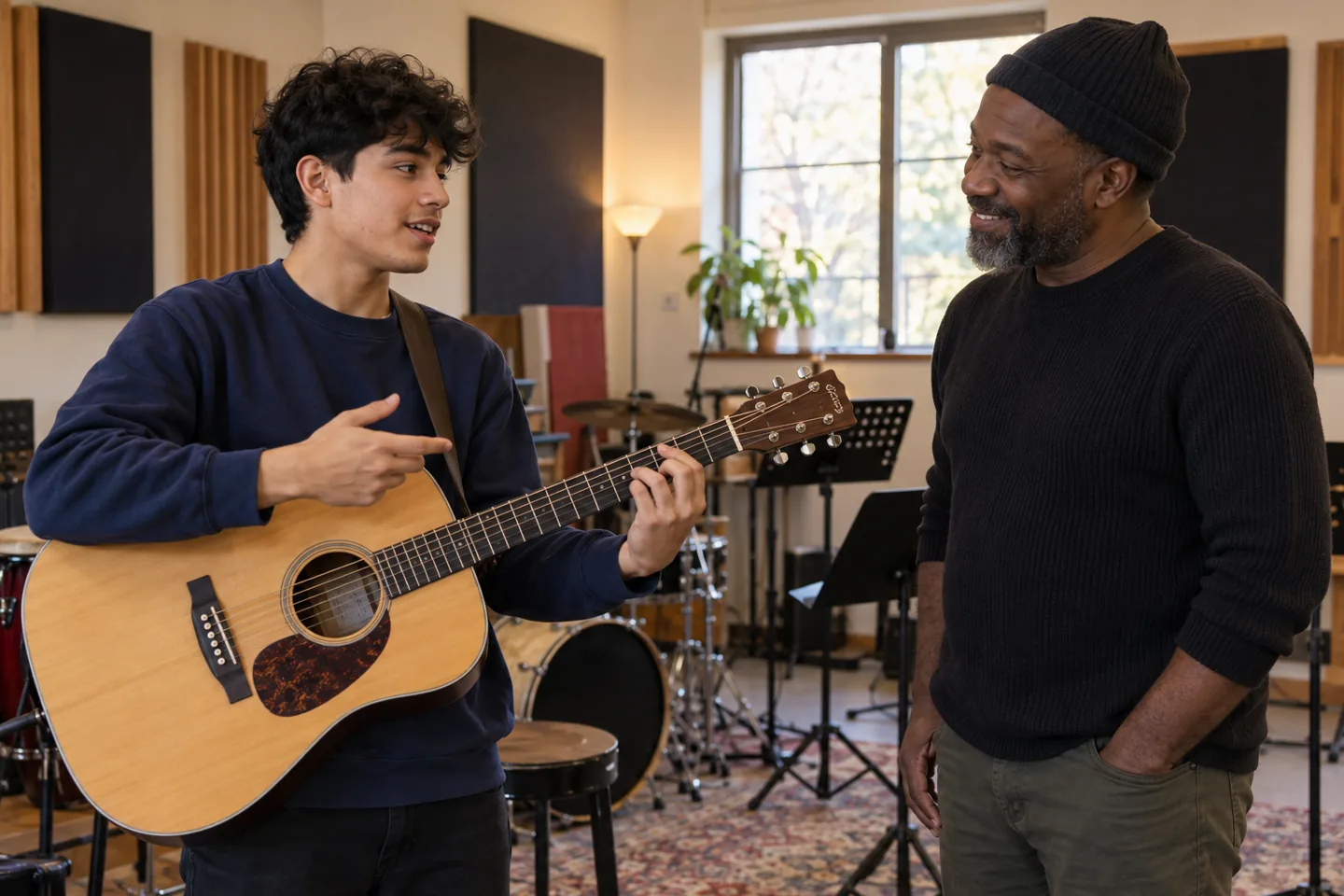
First try: Alex wanted to play a short song on guitar. The chord changes were slow. Alex asked a music mentor to show one change at a time.
Change: Next, Alex practiced that change for five minutes a day. A short recording helped Alex hear which part still needed work. Alex slowed the song down and tried again.
Next step: Later, Alex showed a friend how to practice the same change. Alex used a simple example and gave the friend time to try.
The story may show seeking help, steady practice, and patient teaching. Notice that Alex did not win a contest. The growth is in the actions, not in a prize at the end.
Now try your own version. Start with “At first, I…” Then add “I changed…” and “Now, I can…” Keep each sentence true to what happened.
Connect first-gen strengths with a future goal
Next, look across your three boxes. Circle a skill that appears more than once. Then ask where you would like to use it next.
For example, patient teaching might lead you to help at a club meeting. Problem-solving could lead you to try a science project. Planning might help you set aside time for a college task.
A skill is a clue, not a command to choose one career. You can enjoy music without making it your job. You can also build a skill that does not feel easy yet.
Our career exploration guide connects interests with real tasks. If you are closer to a job search, use our student resume guide to describe your role with clear examples.
Finally, choose a small test: “This week, I will use my planning skill to…” Make the next step small enough to fit your real schedule.

Ask someone to notice growth with you
You may miss a strength because it feels normal to you. Ask a trusted person to look at your timeline. A friend, family member, teacher, or mentor may notice something you skipped.
Try these questions: “When did you see me improve?” “What did I do that helped?” “What should I keep practicing?” Ask for a real example rather than a broad label.
Then decide what fits. You can accept a useful detail without agreeing with every comment. Your timeline belongs to you.
Adults can help by naming what they saw. For example, “You changed your plan when the first idea failed” gives a student something clear to use. Also, offer practical help with the next step. Praise does not replace time, tools, or support.
If you want to prepare a question for school staff, our real-story writing guide can help you turn a broad claim into a clear example.
Keep control of the story you share
You can mark each timeline note “private,” “share with one person,” or “okay to share.” Change those choices whenever you want. Taking part in a celebration does not require a public post.
Leave out someone else’s private details. You can say that you learned to plan without naming a family problem. You can also choose a joyful story about a game, a craft, or a friend.
If you use a timeline note for an essay later, follow that essay’s prompt. Do not stretch the facts to make a stronger ending. Our scholarship essay outline can help you build a true, focused answer.
Celebrate first-gen strengths with one small action
Before November 8, choose one way to mark your progress. Thank someone who taught you a skill. Save a photo of something you made. Or ask your school about its first-gen events.
Check the school’s own event page for its date, location, and access details. Some events happen before or after the national day. The celebration overview includes both colleges and K–12 schools.
Then save your timeline and revisit it after your next small challenge. Add what you tried, what changed, and who helped. Growth can include asking for support or choosing a better pace.
Explore iLevelUP’s free student tools for your next step. Your first-gen strengths are not a finished list. You can keep learning, with other people beside you.
Frequently asked questions
They are skills and qualities you can name from your own experience as a first-gen student. There is no single list that fits everyone. Try our story and belonging guide if you need help finding a starting point.
The national day is November 8. Local events may take place on nearby dates. Check FirstGen Forward’s official overview, then look at your school’s own schedule.
Yes, under definitions based on your parents’ education. Still, a school or program may use its own rules. The FirstGen Forward definition guide explains common questions. Ask the specific program when you need a firm answer.
Start with one thing you learned recently. Name the action you took, even if you needed help. You can also ask someone you trust for an example. Our real-task guide offers ideas to explore.
No. You can keep it private, share one box, or discuss it with one trusted person. If you later use a note in an essay, our personal statement guide can help you choose details you feel ready to share.
It gives you examples to discuss when exploring roles or writing a resume. Connect your action to a skill, then explain what you learned. The NACE skills guide provides terms such as teamwork and communication. Keep your claims accurate.