
Volunteer Team: UI/UX Team
Volunteer Availability: Virtual
Game systems designer volunteer opportunity at iLevelUP. Fully remote, unpaid work for eligible applicants in the United States. This opening is for the Game Systems & Engagement Designer role.
Game systems designer: remote volunteer opportunity
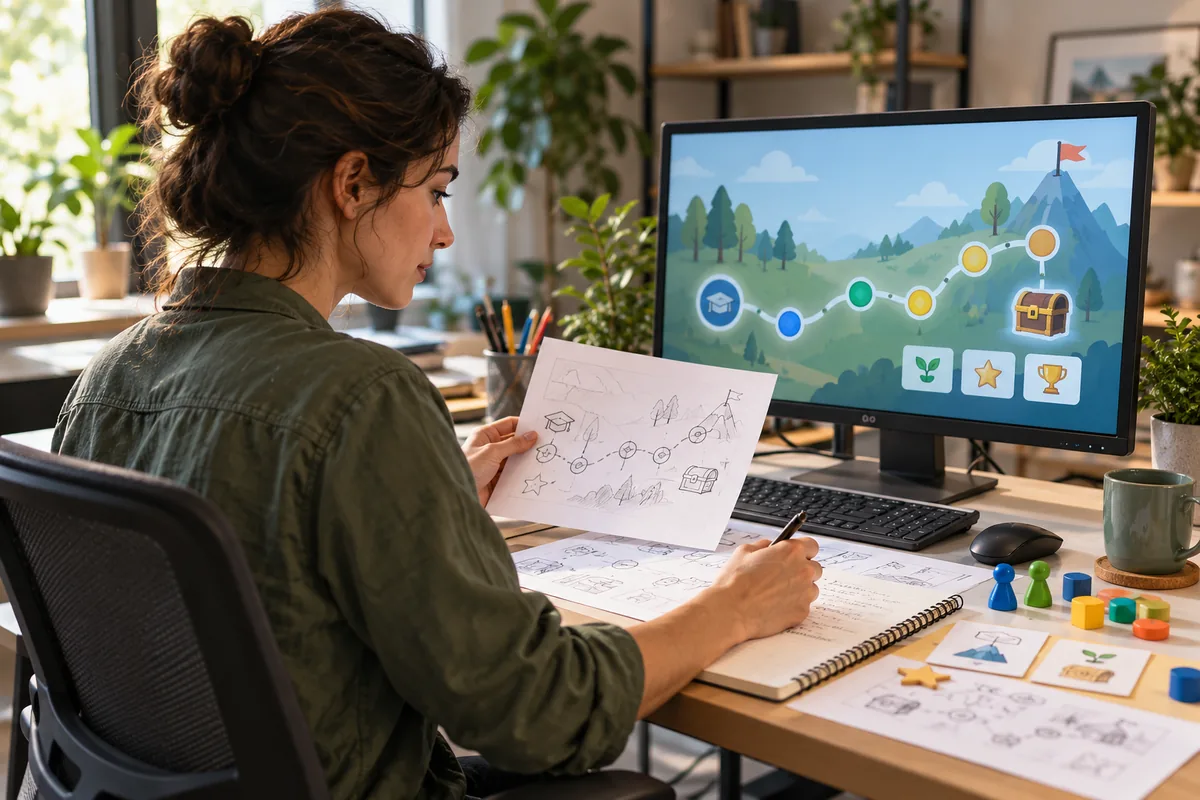
Make progress meaningful, challenge achievable, and returning to learn a choice.
Fully remote | Unpaid volunteer | United States
About iLevelUP
iLevelUP is a free, AI-powered, game-based learning experience being developed by Believe in Me to help young people explore education and career possibilities and build self-confidence. The product is in limited beta. The learner is the main character, and iLevelUP is the guide.
Game systems designer role overview
The official role is Game Systems & Engagement Designer. iLevelUP seeks a remote volunteer game systems designer to create the rules and feedback loops behind its learning adventure. You will shape how learners choose missions, see progress, practice skills, recover from setbacks, and decide what to explore next.
The work calls for a systems designer who can connect motivation with educational purpose. You will prototype mechanics, test their effects, and give engineers clear specifications that can be implemented and tuned.
What you will own
You own gameplay rules, progression, rewards, difficulty, and engagement hypotheses. The curriculum architect owns instructional outcomes, UX researchers lead learner research, and product contributors help prioritize and interpret experiments.
Game systems designer responsibilities
- Define the core activity loop, session flow, and return experience, showing how each supports a useful learner outcome.
- Design quest structures, XP rules, milestones, achievements, unlocks, and learner-selected goals with transparent earning criteria.
- Build progression and reward models that recognize practice and meaningful accomplishment without turning activity volume into a proxy for learning.
- Specify challenge selection, hints, retries, difficulty adjustments, and recovery paths that encourage persistence without punishing a learner for needing help.
- Create accessible alternatives for time pressure, precision, sound, motion, and other mechanics that could exclude learners.
- Develop respectful reminders and comeback experiences that allow breaks and different life circumstances. Avoid loss-based streak pressure, manipulative reward schedules, and compulsory public comparison.
- Produce prototypes, balancing spreadsheets, configuration tables, edge cases, and developer-ready acceptance criteria.
- Work with research and analytics contributors to examine comprehension, challenge balance, completion quality, exploits, and return reasons; revise mechanics using evidence.
Early deliverables
- First 30 days: map the existing experience and propose a testable core loop tied to learning objectives.
- By 60 days: deliver a playable or interactive prototype with progression rules, reward tables, and initial balancing evidence.
- By 90 days: refine the system using approved playtests, document implementation requirements, and establish a small set of meaningful tuning indicators.
Game systems designer required qualifications
- A portfolio, prototype, design document, or case study demonstrating game systems, progression, gamification, economy design, or balancing.
- Ability to reason about feedback loops, incentives, edge cases, exploits, and unintended behavior.
- Comfort using spreadsheets, diagrams, and lightweight prototypes to model and communicate rules.
- Understanding of player motivation and the difference between useful engagement and pressure to keep interacting.
- Ability to translate design intent into testable specifications and collaborate reliably with engineers and learning designers.
Game systems designer helpful experience
- Experience designing educational games, youth products, accessible game mechanics, or non-monetized reward systems.
- Experience with Figma, analytics events, experiment design, web games, or iterative playtesting.
How we work
Work with learning design, product, UX, narrative, character animation, engineering, and data contributors. Research involving young people must follow the team’s approved consent, privacy, and safeguarding process.
Why volunteer with iLevelUP
- Contribute to a nonprofit education product at a stage when your decisions can shape the learner experience.
- Own a meaningful body of work and collaborate across education, design, engineering, and student support.
- Develop work samples and share approved contributions in your portfolio while respecting project and learner confidentiality.
Time commitment and location
Fully remote and unpaid. Contribute at least 10 hours per week for 12 months, with flexible scheduling and dependable progress updates.
How to apply
Apply for the Game Systems & Engagement Designer volunteer role. Use the Believe in Me volunteer application. Share your résumé or LinkedIn profile, relevant work samples, weekly availability, and why this role interests you. Share only authorized materials and remove personal, confidential, or proprietary information.
Include a systems map, balancing model, game-design document, or prototype. Explain one mechanic you changed after playtesting and how you judged whether it improved the experience.
We welcome applicants from varied backgrounds and pathways. Demonstrated capability, judgment, and dependable collaboration matter more than a particular degree. If you need an accommodation for the application or interview process, contact us through iLevelUP’s contact page.
Role details
- Role: Game Systems & Engagement Designer
- Program: iLevelUP, a Believe in Me initiative
- Employment type: Unpaid volunteer
- Workplace: Fully remote
- Applicant eligibility: United States
- Team: UI/UX Team
- Company address: 107 Spring Street, 2nd Floor, Seattle, WA 98104
- Job ID: 1012
Fully remote and unpaid. Contribute at least 10 hours per week for 12 months, with flexible scheduling and dependable progress updates.