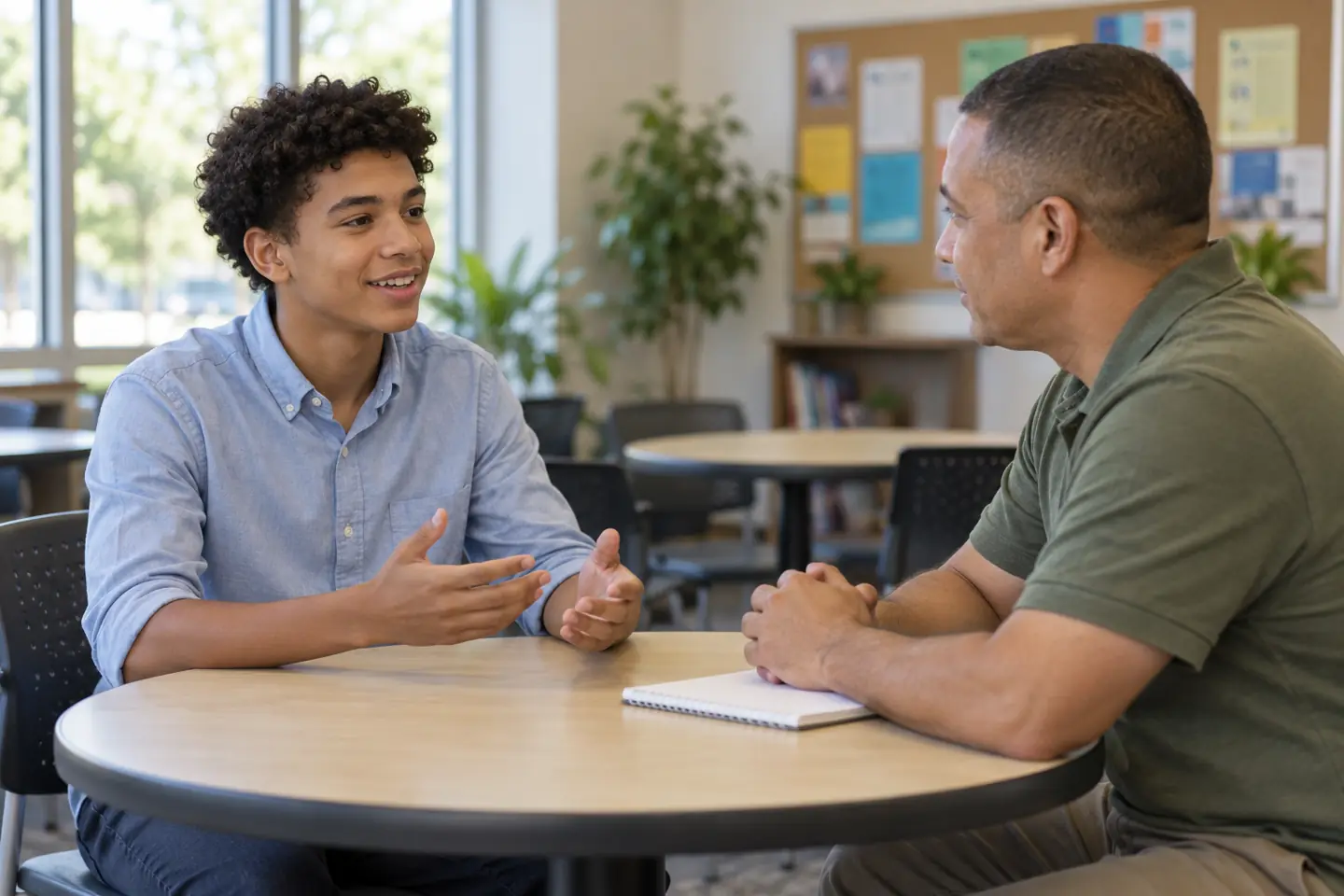
Interview questions for high school students are easier to practice when you start with real experiences. Choose one summer job, read its duties, and prepare short examples from school, activities, volunteering, or family responsibilities. Then say your answers aloud and ask for feedback.
Quick answer: Practice introducing yourself, explaining your interest in the job, describing teamwork, and discussing a mistake. Also, prepare an honest answer about your schedule and two questions for the employer. Use examples to show what you did and what you learned.
You do not need a long work history to begin. This guide includes original fictional answer examples and Carver’s short practice plan. Adapt the prompts to your own experience rather than memorizing someone else’s story.
Interview questions for high school students: prepare your evidence
First, save the job description and circle two duties you understand. Next, identify an experience that connects with each duty. For example, organizing a club supply box could help you discuss keeping a workspace orderly.
CareerOneStop’s interview practice guidance encourages preparation and examples from activities when work experience is limited. Our soft-skills practice guide helps you notice communication and follow-through in everyday tasks.
Then write three notes for each example: the situation, your action, and the result. Also, add what you learned if the outcome was mixed. Keep your own contribution clear without taking credit for a whole team’s work.
Finally, choose details you feel comfortable sharing. You can describe a responsibility without revealing private family circumstances. Our guide to describing work and family duties offers a way to recognize those skills.
1. Practice a clear introduction
Start with who you are as a student, one relevant strength, and why this role interests you. Next, connect that strength to a real example. Keep the answer focused on the job rather than your entire life story.
Original fictional example: “I’m a high school junior, and I like organizing tasks. In our art club, I helped sort supplies so members could find what they needed. I’d like to bring that care to this store and learn how your team helps customers.”
Then check whether every detail is true for you. Replace the school year, activity, and task with your own. Also, avoid claiming skills you have not practiced.
Finally, rehearse once with a trusted adult or friend. Ask whether your main point was clear. The CareerOneStop question list can help you choose another introduction prompt for practice.
2. Interview questions for high school students about job interest
Explain what you noticed about the position and what you want to learn. First, review the employer’s website and the job description. Next, choose one specific duty that connects with your interests.
Original fictional example: “Your posting says this role helps visitors find activities. I enjoy explaining directions to new club members. I’d like to learn your check-in process and help visitors feel welcome.”
Then separate researched facts from assumptions. If the posting does not explain a duty, turn that gap into a question. Also, avoid promising that this is your dream career if you are still exploring.
Finally, use our career cluster worksheet to connect the role with a skill you want to test. CareerOneStop’s interview preparation page offers more ways to get ready for an employer conversation.

3. Interview questions for high school students about teamwork
First, select a real situation where you worked with someone else. Next, explain your task and one action you took. Then name the result without exaggerating it.
Original fictional example: “Our class needed to finish a display by Friday. I made a supply list and checked with two classmates about missing items. We finished the display on time, and I learned to check progress earlier.”
Also, practice a version about a sport, hobby, performance, volunteer project, or household task. You do not need a leadership title to describe useful teamwork. A small, clear example is enough to start.
Finally, compare your answer with the role’s duties. Our extracurricular skills guide helps you connect activities with evidence. The goal is to explain your contribution in plain language.
4. Interview questions for high school students about mistakes
Choose a real mistake you can discuss calmly. First, describe what happened briefly. Next, explain how you responded and what you changed afterward.
Original fictional example: “I forgot to confirm which supplies our group needed. When we noticed the gap, I told the group and helped revise the plan. Now I write a checklist and confirm it before we begin.”
Then check that the answer shows responsibility. Avoid blaming another person or inventing a perfect recovery. Also, it is fine to describe a lesson you are still practicing.
Finally, rehearse a related prompt about learning a new task. If you need help, our help-seeking guide offers ways to prepare a clear question. You can show willingness to learn without pretending you already know everything.

5. Explain your availability and ask useful questions
First, write the days and times you can reliably work. Next, account for school, travel, and existing commitments. Then explain your availability honestly rather than agreeing to a schedule you cannot manage.
For example, you might say, “I can work Tuesday and Thursday afternoons and Saturdays. Could you explain how shifts are scheduled?” Adapt the statement to your own situation.
Also, prepare two questions about the role. Ask how new team members learn tasks, what a typical shift includes, or what the next hiring step is. The CareerOneStop practice resource includes ideas for questions to ask an interviewer.
Finally, confirm the interview time, location, and format. For a video meeting, the CareerOneStop virtual-interview guide offers setup advice. Check the sound and connection with a practice call before the meeting.
Carver’s plan for practicing interview questions for high school students
First, choose three prompts from this guide. Next, use the plan below for a short practice session. The suggested timing is flexible; take more time if you need it.
| Time | Practice task |
|---|---|
| Minutes 1–3 | Review the job duties and choose three true examples. |
| Minutes 4–9 | Answer three prompts aloud with a practice partner. |
| Minutes 10–12 | Ask which action and result were clearest. |
| Minutes 13–15 | Revise one answer and prepare two employer questions. |
Then repeat your revised answer in your own words. A practice partner can check clarity without judging your accent or personality. Also, you can practice alone by reading prompts aloud and reviewing your notes.
Finally, explore iLevelUP’s student resources and save one next step for this week. Interview questions for high school students become more useful when practice leaves you with honest examples and a clearer plan.
Frequently asked questions
How can I answer interview questions without job experience?
Use true examples from school, activities, volunteering, or responsibilities at home. Then explain your own action and what happened. Our soft-skills guide can help you find an example.
Should I memorize the sample answers?
No. The examples here are fictional practice models. Replace them with your own experiences and rehearse the main points. CareerOneStop’s practice questions offer more prompts for a session.
What can I say when I need time to think?
Pause briefly and say that you are thinking of an example. Then ask the interviewer to repeat or clarify the question if needed. Our help-seeking guide can help you rehearse a clear request.
Which questions should I ask the employer?
Ask about learning the role, a typical shift, and the next hiring step. Then choose the questions most relevant to you. CareerOneStop’s interview resource includes further ideas.
How should I prepare for a video interview?
Confirm the format and test your sound and connection. Next, choose a space where you can focus. The CareerOneStop virtual-interview guide offers practical setup tips.
How can a family member help with interview practice?
Read one prompt, listen, and ask what the student did in the example. Then offer one specific suggestion about clarity. Our weekly planning routine can help make room for a short session.
Editorial note: This article follows the April 18, 2025 content-calendar date. Sources were reviewed October 11, 2026. Sample answers are original fictional practice examples. Photos are original AI-generated illustrations.