
Public service careers help communities meet shared needs. For students in grades 6–12, exploring these paths starts with a question: What kind of work would help people live, learn, or thrive?
Juneteenth offers a moment to reflect on freedom, access, and whose voices shape community decisions. First, learn the history. Then, use this guide to compare three careers and choose one small research step. You do not need to choose your future today.
Quick answer: Students can explore public service careers by naming a community need, researching two roles, comparing their daily tasks and training, and talking with a trusted adult. Keep a short record of what interests you and what you still need to learn.
Start with the history of Juneteenth
Juneteenth commemorates June 19, 1865, when Union troops arrived in Galveston, Texas, and announced freedom to enslaved people. This happened more than two years after the Emancipation Proclamation. The Smithsonian’s history of Juneteenth explains that legacy and the long struggle for freedom.
Before discussing careers, make space for that history. Read a museum resource, attend an age-appropriate learning event, or discuss a historical account with a teacher. Also, respect that people may observe the day in different ways.
Next, ask: Who has access to the services a community needs? Whose ideas help shape them? These questions can guide career reflection without placing the burden of fixing unfair systems on young people.
What counts as public service careers?
Public service careers cover work that supports shared needs, such as clean water, family services, and community planning. Some roles sit within government agencies. Others serve the public through nonprofit groups or other employers.
However, a job title alone does not explain the work. Look at the employer, the people served, and the tasks involved. A role that sounds interesting may involve more paperwork, fieldwork, or meetings than you expect.
For example, two people may both improve neighborhood health while using different strengths. One might help families find services. Another might study water quality. For a wider starting point, read our guide to careers that serve the community.
Compare three public service careers
The roles below show three ways to serve: helping people, studying the environment, and planning places. Use them as examples, then search for jobs in your own area. Training requirements vary by position and employer.
1. Social and human service assistant
These assistants help clients find services and support professionals such as social workers. Tasks can include helping with forms or connecting people with benefits. The BLS career profile for service assistants lists a high school diploma as the typical entry education, with training on the job.
Try this: Read a local agency’s public resource page. Then, write three questions about how people find help. Notice whether listening, explaining, and organizing appeal to you.
2. Environmental science and protection technician
These technicians help monitor the environment and investigate pollution. Work may include collecting samples or recording results in a lab or the field. The BLS environmental technician profile lists an associate’s degree as typical, while noting that requirements vary.
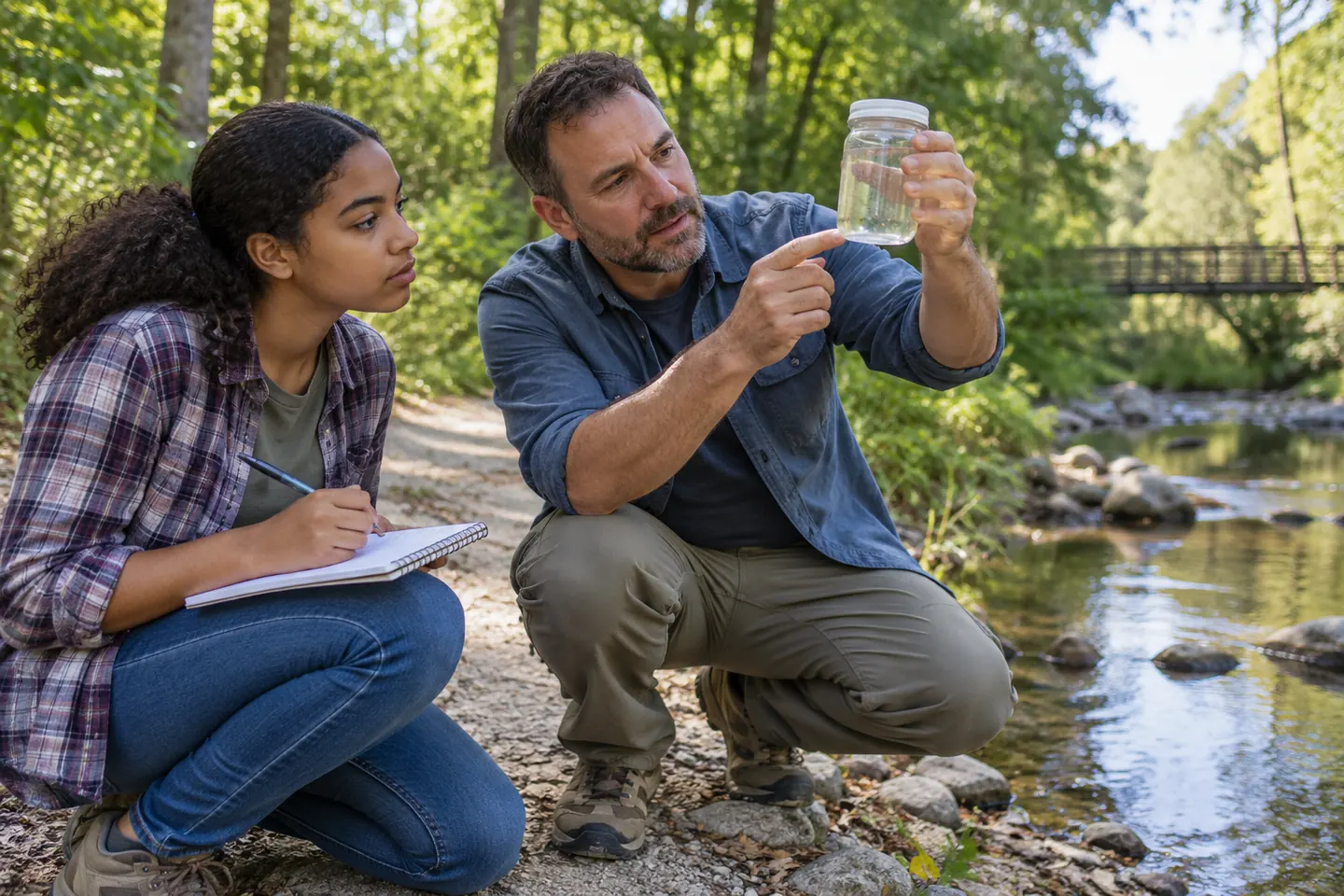
Try this: Review a public water-quality report with a teacher. Next, identify one term you want to understand. Leave sampling and testing to trained people; reading a report is a useful first step.
3. Urban and regional planner
Planners help develop land-use plans and consider community needs. They may review maps, study data, and gather public input. The BLS planning career profile describes degree-based routes, including bachelor’s or master’s programs.
Try this: Look at a public park or transit plan. Then, ask whose needs the plan addresses and what questions remain. Notice whether maps, writing, and group discussions interest you.
Use the same questions for public service careers
Fair comparisons work best when you ask the same questions. First, choose two roles. Then, create two columns in a notebook and record your answers under these headings:
- Purpose: What community need does the role address?
- Daily work: What are three common tasks?
- Setting: Does the work happen in an office, outdoors, or across several places?
- Preparation: What education or training does the source describe?
- Questions: What needs a second source or an adult’s guidance?
Also, record the source and the date you checked it. A national profile describes a broad pattern; a local job listing may ask for different experience. Therefore, treat each listing as evidence about that position.
Use My Next Move to search career tasks and interests, then compare those findings with BLS profiles. Our career exploration journal guide can help you keep the notes clear.
Try Taiga’s curiosity-and-service challenge
Bring Taiga’s STEM and service angle into a short research challenge. The goal is to connect a question with evidence, then share what you learned. Set aside about 30 minutes for these steps.
- Name a need. For example, choose clean water, access to family services, or safe routes to a park.
- Find two roles. Use official career profiles to identify different jobs connected to that need.
- Compare the work. Write one task, one training route, and one open question for each role.
- Share one finding. Tell a mentor which task interests you and why. Then, ask what you could learn next.
For example: “I like noticing patterns, so the technician role interests me. However, I want to learn how much time the job involves writing reports.” That answer connects an interest to a real task.
Finally, save the notes. If you feel unsure about your strengths, use our student strengths check-in before choosing the next question.

Choose a safe next step in public service careers
Research can lead to a conversation, a class choice, or a supervised learning activity. Start with something small. For example, ask a counselor about a career talk or ask a teacher to explain a public report.
Before a visit, interview, or volunteer activity, check age rules and supervision with a trusted adult. Also, use official contact channels. Do not share private information about yourself or other people in your research notes.
Next, connect your questions to school. Science may help you explore environmental work, while writing and social studies can support service or planning interests. Our guide to choosing high school classes offers a way to keep options open.
Compare training routes for public service careers
A useful reflection separates interest from certainty. Ask yourself: Which task held my attention? What did I learn about the people served? What surprised me about the work?
Then, write one sentence that starts, “I want to learn more about…” This keeps the next step manageable. You can be curious about several public service careers at once.
If a role interests you enough to explore training, compare costs, program fit, and entry requirements. Our guide to trade school, community college, and four-year college can help structure that conversation. Check specific programs with a counselor before making a decision.
Public service careers: student FAQs
What are public service careers for high school students to explore?
Start with roles connected to a need you care about. For example, service assistants, environmental technicians, and planners support communities in different ways. Compare their tasks using My Next Move and our community career guide. Exploration does not require choosing a job now.
How can Juneteenth guide career reflection respectfully?
First, learn the history through a resource such as the Smithsonian’s Juneteenth account. Then, discuss access, opportunity, and whose voices shape services. Keep that reflection rooted in the holiday’s history. A career activity should support learning rather than replace the observance.
Do all public service careers require a four-year degree?
No. Routes vary by role. The BLS service assistant profile lists a high school diploma as typical entry education. Other roles may need college degrees or further training. Next, check the requirements for the specific job and compare education pathways with a counselor.
What can a middle school student do first?
Choose one community need and read about two related careers with an adult. Then, write one interesting task and one question for each. Use our career exploration journal to save the notes. An official search tool such as My Next Move can help you find examples.
How can I explore environmental work safely?
Begin by reading a public report or talking with a science teacher. The BLS environmental technician profile explains the professional tasks. Do not collect or test unknown materials on your own. Instead, choose a supervised learning activity and connect it with your school course options.
What should I share with a mentor after the Taiga challenge?
Share one role, one task you liked, and one question you still have. Also, include the source you used, such as an official BLS career profile. Then, explore iLevelUP’s student resources together to choose a practical next step.
Your next step: Choose two roles, compare one task from each, and share one question with a mentor. Small discoveries can help you build confidence as you explore.
Career sources reviewed October 9, 2026. Images are original AI-generated editorial illustrations.