What is a career exploration journal?
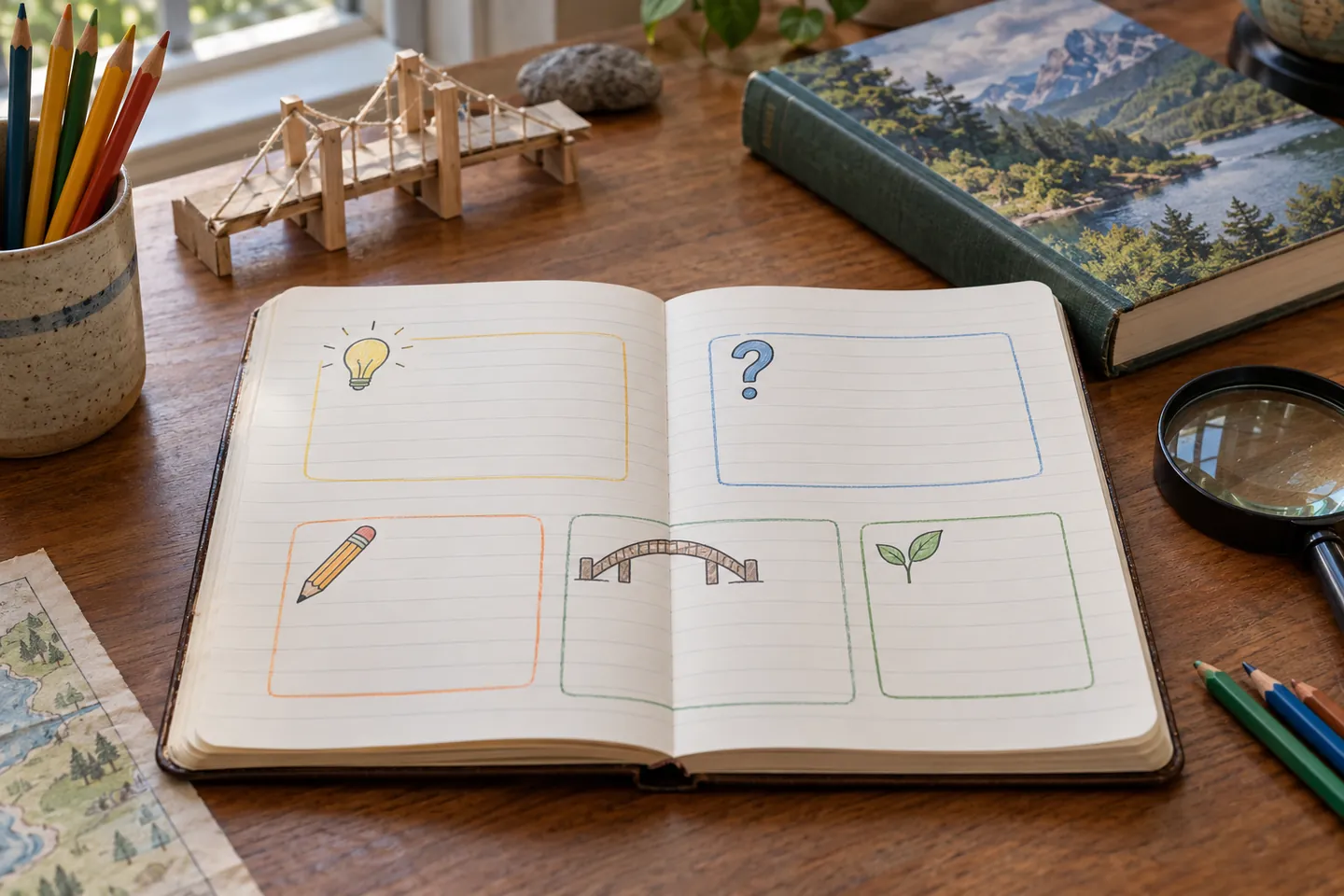
A career exploration journal is a place to record what you tried, what interested you, and what you want to learn next. For middle school students, it can be a notebook, a few sheets of paper, or a private digital document. You can use words, sketches, or short notes.
This career curiosity journal helps you collect clues about your interests. It does not require you to choose a job or college now. Instead, start with one experience and one question. Then use the prompts below to connect everyday learning with possible future paths.
Families and educators can help students reflect without supplying the answers. Pair this guide with iLevelUP’s middle school future-readiness quests when you want another small activity. The goal is to notice, explore, and return with a new question.
Career curiosity in five simple steps
- Notice: name something that caught your attention.
- Try: describe a small activity or experience.
- Reflect: record what you enjoyed and what felt difficult.
- Research: look up one related career or ask a trusted adult.
- Plan: choose one next step you can manage.
You can complete a short entry in about ten minutes. That is a suggested routine, not a requirement. Also, a half-finished page is useful if it helps you remember a question.

Set up your career exploration journal
Choose a format you can use easily. A paper notebook works without internet access. A private document may help you keep links beside your notes. If writing is difficult, try drawing, a short voice note, or asking someone to write down your words.
Next, give each entry a date and a simple title. Leave space for the five prompts below. Keep a separate page for unfamiliar career words so you can revisit them later.
You do not need a fancy notebook, a paid test, or special equipment. Start with what you have. Also, decide what you want to share with a teacher or supportive adult. Keep private family details, passwords, and contact information out of public posts. A career exploration journal can stay personal even when you discuss one idea from it.
Five career exploration journal prompts to reuse
Use the same prompts after a class project, hobby, community activity, or career conversation. Repeating the format makes it easier to compare experiences.
- What caught my attention? Name a task, problem, topic, or person’s work that made you curious.
- What did I actually do? Describe your actions. “I tested three designs” tells you more than “I did science.”
- What did I enjoy or want help with? Notice both. A difficult part can become a question to explore.
- What work might connect to this? List one or two careers to research. You do not have to know the answer yet.
- What is my next small step? Pick one question, short activity, or conversation. Add a date if that helps.
Finally, write “I wonder…” at the bottom. This leaves room for a new idea rather than treating the page as a final decision.
A sample career exploration journal entry
This fictional example shows how a student might reflect after building a paper bridge. It describes an exploration activity, not professional engineering training.
- What caught my attention? I wondered why one paper bridge held more weight than another.
- What did I do? I folded paper in three ways and compared the designs.
- What did I notice? I liked testing ideas. However, measuring carefully was harder than I expected.
- What work could connect? I want to read about civil engineers and drafters.
- What will I try next? I will ask my teacher how to make the comparison fair.
The Bureau of Labor Statistics student career explorer groups careers by interests, including building and fixing things. Use it to find a related occupation. Then add one fact and the source link to your entry.
Also, leave space for a different reaction. Another student might enjoy drawing the design more than testing it. Their next question could lead toward art, design, or a different hands-on field.

Research one career without getting overwhelmed
Begin with the activity you enjoyed, not a long list of job titles. For example, “I like helping someone understand a problem” is a useful clue. Next, look for related work using My Next Move or the BLS student resource.
The Occupational Outlook Handbook includes information about job duties, work environments, and education or training. Choose one occupation and look for three answers: What do people do? Where do they work? What preparation is typical?
Record the page link and the date you checked it. Then separate facts from guesses. “This profile describes outdoor work” is different from “I would love every part of this job.” Also, treat pay and job outlook as information to revisit, not a promise about your future.
An interest tool can suggest ideas, too. CareerOneStop’s interest guidance connects preferred activities with career interests. Discuss unfamiliar results with a trusted adult. Your curiosity can change as you gain experience.
Try a ten-minute weekly journal routine
Choose a time that fits your week. You might reflect after a club meeting, a class project, or an activity at home. These time blocks are suggestions you can shorten or stretch.
- Minutes 1–2: choose one experience and date the entry.
- Minutes 3–5: answer the first three prompts with words or sketches.
- Minutes 6–8: find one career clue or write a question to research later.
- Minutes 9–10: choose a small next step and save the source.
If you need an activity first, browse iLevelUP’s career exploration ideas for students. Then use your journal to reflect on the part that stood out. During school breaks, a library book, a simple project, or a conversation can offer another starting point.
After a few entries, look for patterns. Do you enjoy building, explaining, organizing, creating, or helping? Mark repeated clues, but keep room for new interests.
Cash's resource check: explore with what you have
Cash’s money-planning angle begins with a practical question: “What resources would help me try this next step?” Add a small resource box to your career exploration journal. List materials, time, transport, or adult help you may need.
- What do I already have? Consider paper, school supplies, a library book, or someone who can answer a question.
- What can I ask about? Check whether a school or library offers a relevant activity and what participation requires.
- What would cost money? Ask a supportive adult about fees and alternatives before committing to a paid activity.
You do not need to buy equipment to prove an interest is real. Also, a resource barrier is a planning question, not a judgment about your ability. For older students ready for a broader discussion, iLevelUP’s teen money-skills guide offers another place to begin.
How adults can support career curiosity
Ask about the experience before suggesting a job. Try, “Which part would you like to do again?” or “What would you ask someone who does this work?” Then let the student choose what to record.
Offer help finding a reliable source or arranging a safe conversation. Also, include many kinds of work and learning routes. Families can explore trade school, community college, and four-year college pathways when students are ready for that discussion.
Keep feedback specific: “You tested another design when the first one failed.” Avoid turning one activity into a prediction about a child’s future. If a student wants to serve their community, these community-focused career ideas can spark another question. Encourage exploration at a pace that fits the student.
Start your next curiosity entry
Choose one experience, answer the five prompts, and save one next question. You can finish on paper today. If you are unsure where to begin, describe something you enjoyed learning this week.
Explore iLevelUP’s student resources for more college and career planning ideas. Then revisit your career exploration journal after the next activity. Cash’s resource check can help you choose a next step that fits what you have available.
Frequently asked questions
What should a middle school student put in a career exploration journal?
Record an experience, your reaction, a career clue, and one next question. Add a source link when you research a job. The BLS student career explorer offers a starting point organized by interests.
Is a career exploration journal the same as a career test?
No. A journal collects your reflections over time. An interest tool suggests ideas from your answers. CareerOneStop’s interest guidance explains those interests. Use both as conversation starters, not instructions to choose one future job.
What if I do not know which career interests me?
Start with an activity you enjoyed or a problem you wanted to solve. Then explore related work through My Next Move. You can write an unanswered question and return to it later.
Can I draw instead of writing every answer?
Yes. Sketches, labels, or short notes can capture what you noticed. Choose a format that works for you. Pair it with a small activity from iLevelUP’s middle school readiness guide if you need a starting point.
How often should I use my career curiosity journal?
Try one short entry each week or after an experience worth remembering. Adjust the routine to your schedule. These student career activities can provide ideas, but you can also reflect on everyday learning.
Do I need to pay for supplies or career tools?
No purchase is required for this journal routine. Use available paper and materials. You can also read free public resources such as the Occupational Outlook Handbook. Ask a trusted adult about fees before choosing an outside activity.
How can I connect my entries with future classes?
Look for repeated interests and share a few examples with a counselor or teacher. Ask which courses or activities might let you explore them. iLevelUP’s career-strengths check-in can help you organize that conversation.
Sources and review date
Reviewed October 8, 2026. Career research resources: BLS student career exploration; the Occupational Outlook Handbook; My Next Move; and CareerOneStop interest guidance. The journal prompts, sample entry, and weekly routine are iLevelUP editorial suggestions. Check current program requirements before joining an activity.