Study tips for middle school work best when they lead to one habit you can repeat. Before the next school year, choose a small topic, practice remembering it without looking, check your answer, and return to it another day. Start with a short session that fits your summer.
You do not need to recreate a full school day at home. Instead, use a book, a few math problems, or notes from last year to practice how you learn. The goal is to find a routine you can use when classes begin.
Quick start: Pick one topic, prepare your materials, try a question from memory, check it, and write your next step. Use the iLevelUP student resources to choose a habit to practice.
Study tips for middle school: choose one small goal
First, decide what you want to practice. “Understand fractions better” is a broad goal. “Explain how to compare two fractions” gives you a clear task. A small goal makes it easier to notice what you can do and where you need help.
For reading, you might summarize one section of a book. For science, you could explain a familiar process in your own words. Choose something you have already learned so you can practice the study method without needing to master a whole new subject.
If you are unsure where to start, ask a teacher, tutor, or trusted adult for one suitable topic. These student email examples can help you write a specific question when an appropriate school contact is available.
Set up middle school study materials you can use
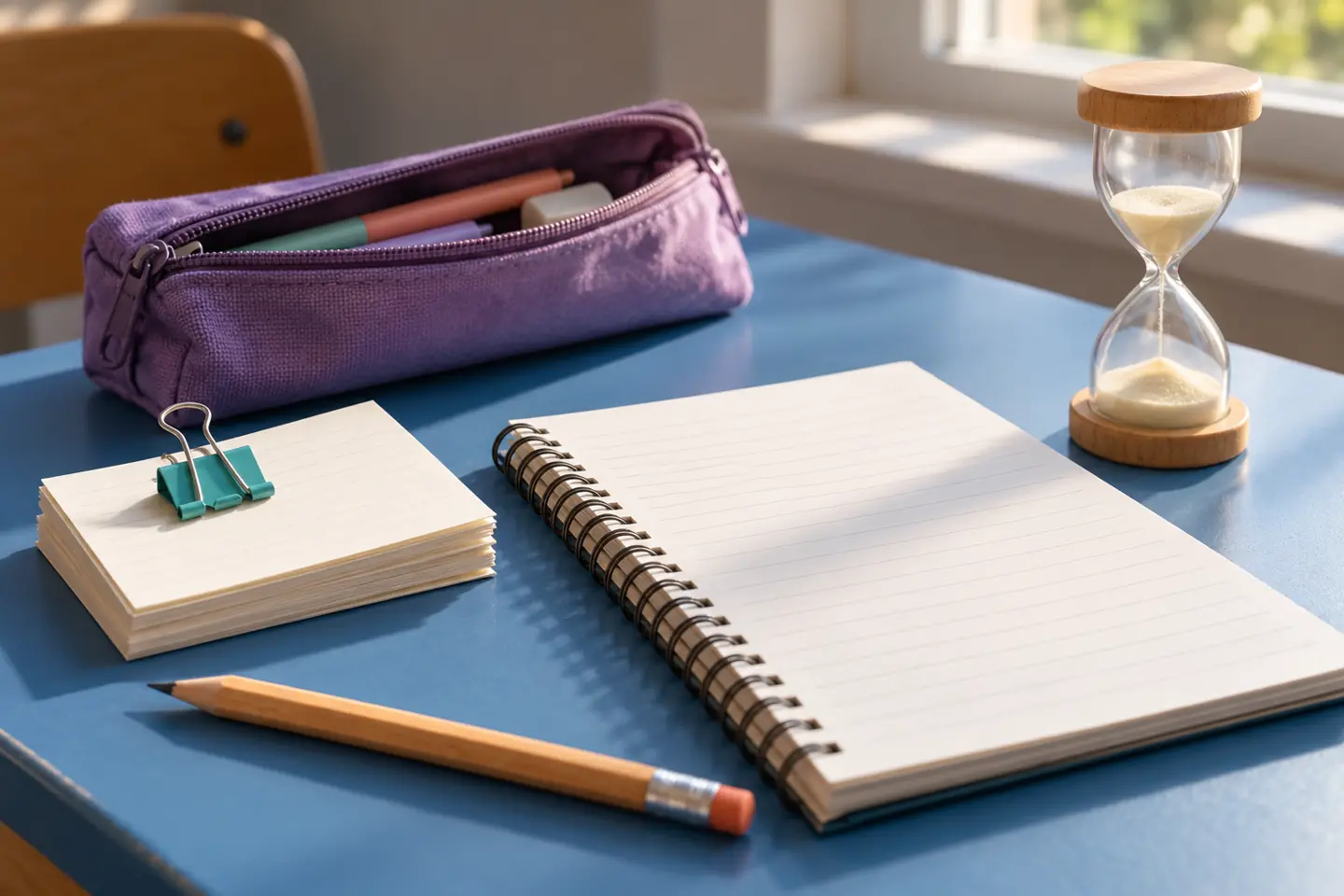
Next, gather only what the task needs. A notebook, pencil, book, and a few cards may be enough. Put the materials in a folder or small bag so you can use them again without a long setup.
Choose a place where you can work with fewer interruptions. If you share space, agree on a short time when others can give you room. You can also ask a library about its study spaces and available resources.
You do not need a new device or special app to begin. For example, paper cards let you put a question on one side and an answer on the other. If access or transport is a barrier, explore these student support resources with an adult.
Study tips for middle school: recall before rereading
Try to answer a question without looking at the notes first. Then compare your response with the source. This practice shows you what you can recall and what needs another look.
The Institute of Education Sciences study guide recommends using quizzing to support learning. You can try a low-pressure version at home: close the book, explain one idea, and check it. A practice mistake gives you something to work on.
For example, after reading a short passage, write two things you remember. Next, reopen the passage and correct any missing or mistaken details. These study tips for middle school turn rereading into an active task, rather than a check that the page looks familiar.

Study tips for middle school: return to a topic later
Spread practice across different days instead of doing all your review at once. The IES practice guide recommends spacing learning over time. A later session gives you another chance to recall the material.
For instance, practice a few questions on Monday, return to them on Wednesday, and check them again over the weekend. This is an original sample schedule, not a required interval. Adjust it to your school guidance and summer plans.
Keep a note of what to review next. If you want more detail about study strategies, read the IES overview of effective study practices. For an older student’s longer review plan, see the iLevelUP final exam study guide.
Check your answer and explain the tricky part
After a practice question, compare your answer with a reliable explanation. Notice the exact step where your thinking changed. Then try to explain that step in plain words.
For example, a math answer might be wrong because you copied a number incorrectly or chose the wrong operation. Those are different problems. Naming the issue helps you decide whether to slow down, review an example, or ask for help.
Write a useful question such as, “Why do we use this operation in the second step?” If you cannot explain a topic yet, keep the question for your next session. This guide to asking for help offers ways to start that conversation.
Try a short middle school study routine
This sample routine uses 15 minutes, but you can make it shorter or longer. The timing is a planning example, not a proven ideal for every learner. Follow any summer assignments and support plan your school has provided.
| Time | Task | What to save |
|---|---|---|
| First 2 minutes | Choose one topic and gather materials | A clear question or goal |
| Next 5 minutes | Read a short section or review one example | The main idea or method |
| Next 5 minutes | Answer from memory, then check | One correction or useful example |
| Final 3 minutes | Explain what you learned and plan another review | Your next question and review day |
Afterward, put the materials away and continue with your summer. A brief routine can be easier to fit around activities and responsibilities. Use these study tips for middle school as a starting point, then adjust based on what helps you learn.
Ask adults to support the habit without taking over
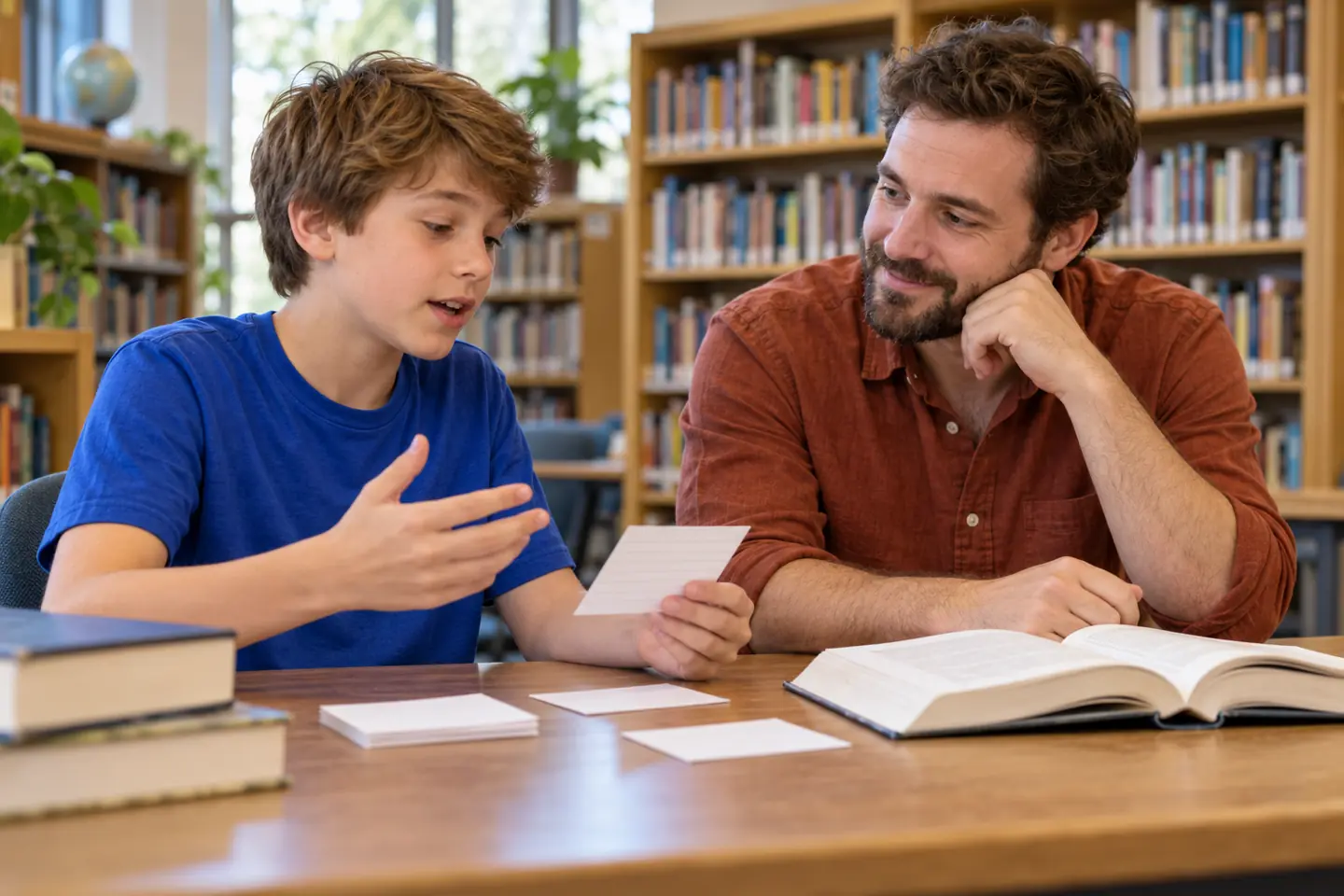
A parent, caregiver, tutor, or mentor can help you choose a task and notice progress. Ask them to listen to your explanation or help you find a reliable example. The work should still give you a chance to think and practice.
The U.S. Department of Education’s homework guide offers advice for families supporting elementary and middle school learners. Use it as a conversation starter about routines and appropriate help.
For instance, an adult might ask, “What have you tried?” before offering a hint. You might ask, “Can you help me find where my answer went wrong?” If a task remains confusing, bring the specific question to a teacher when support is available.
Study tips for middle school: choose your habit before fall
Before fall, review the routine you tried. Ask yourself: Was the goal clear? Could I find my materials? Did checking an answer help me spot a mistake? Choose one habit to keep, and make one change if something did not work.
You can also try a small learning project that matches your interests. This summer career exploration project gives you a way to practice planning and reflection through a hands-on task.
Use Machu to pick one study habit before fall. Start with the iLevelUP student page, then save your goal and next practice day. Study tips for middle school become more useful when you turn one of them into a clear action.
Frequently asked questions
What are the most useful study tips for middle school?
Start with a small goal, practice recalling information, check your answer, and review it again later. The IES study guide explains quizzing and spaced learning. Choose a routine that fits your topic and school guidance.
How long should I study during summer?
There is no single session length that fits every student or task. The 15-minute routine in this guide is a flexible example. Ask an adult or teacher for help adapting the plan, and use these questions for asking for support.
Can I practice without a laptop or phone?
Yes. A book, notebook, pencil, and paper cards can support a simple routine. Choose a topic and check answers against a reliable source. The Department of Education homework guide offers ideas for organizing learning at home.
Why should I answer a question before looking at my notes?
Trying to recall an answer helps you see what you remember. Then checking it shows what needs more practice. Read the IES explanation of effective study strategies for more on retrieval practice.
What if the practice question feels too hard?
Make the task smaller, review one example, and identify the step that confused you. Ask for a hint or explanation instead of copying an answer. These student email examples can help you describe a specific question.
How can a family member help without doing the work?
They can help set up materials, listen to an explanation, or ask what you have tried. Keep the thinking and practice with the student. The Department of Education homework guide offers more suggestions for supportive involvement.
Editorial note: This article fills the June 27, 2025 content-calendar entry. Resources were checked on October 12, 2026. Images are original AI-generated illustrations, not photographs of actual iLevelUP participants.