

Midterm study tips work best when they turn a broad worry into a small daily task. Start with one class, check what the test covers, and choose two topics that need practice. Then use short sessions to recall, check, and retry what you are learning.
Quick answer: Use week one to find gaps and rebuild key skills. Use week two to mix practice, check progress, and prepare for test day. Ask your teacher about course rules before counting on corrections or a retake. This plan can help you organize effort; it cannot promise a grade.
This guide gives high school students and supportive adults a two-week study routine. You can start before a midterm or adapt it after a rough result. Use Machu’s check-in to choose support and keep the next step manageable.
Midterm study tips: start with one clear target
First, collect the study guide, recent classwork, and teacher feedback for one course. Next, ask which topics and question types the test will cover. Use the teacher’s answer to decide what belongs in your plan.
Then sort topics into three groups: “I can explain it,” “I need practice,” and “I need help starting.” Choose two items from the last two groups. A narrow target is easier to work on than “study everything.”
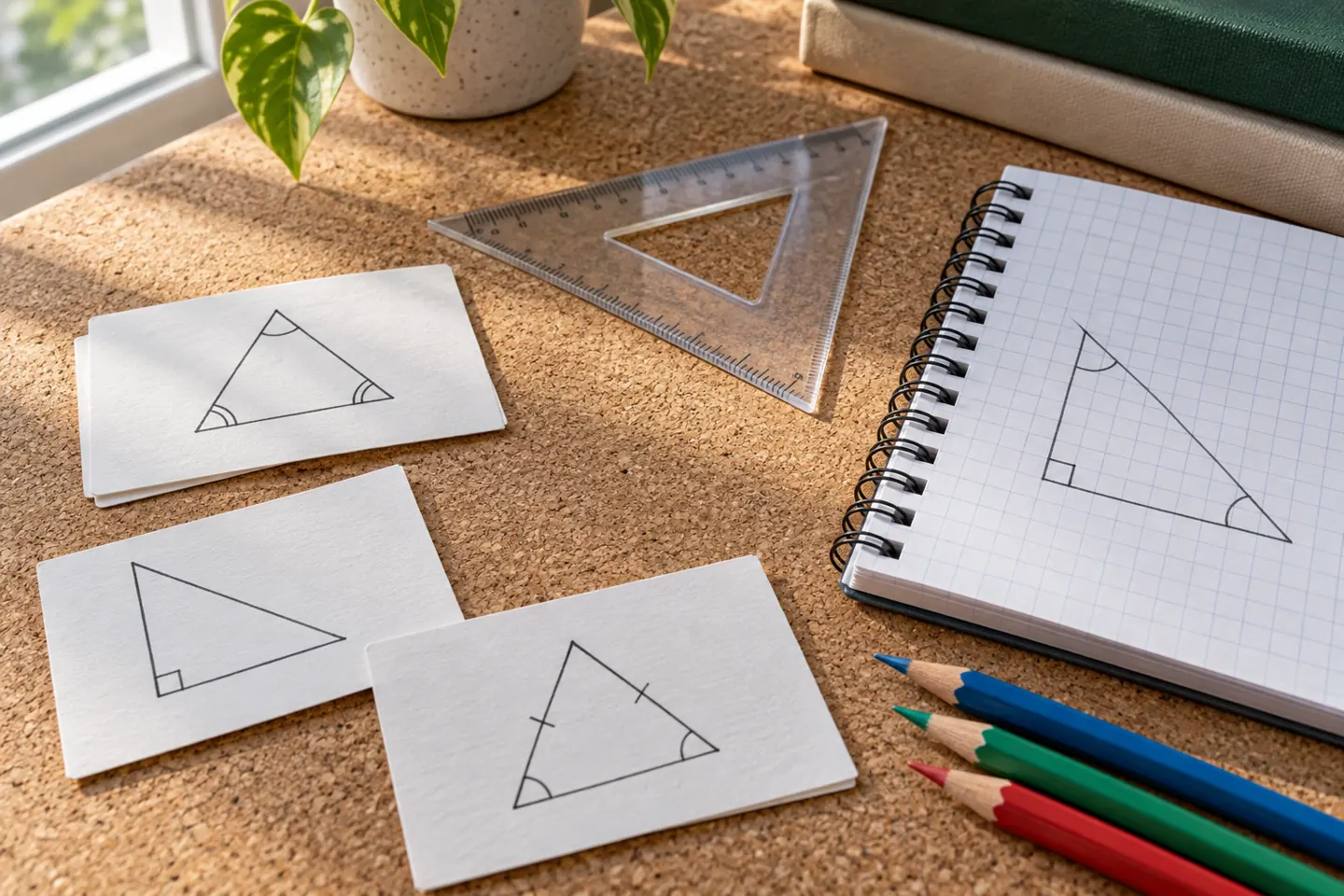
For example, choose “explain a triangle rule and solve three related problems.” Also, keep missing assignments separate from learning gaps. Our midyear grade-reset guide helps with gradebook questions. This article focuses on what to do during study sessions.
Week one: midterm study tips for rebuilding skills
First, schedule a short session you can realistically repeat. The outline below uses about 20 minutes on study days. That timing is an original planning suggestion, not a required formula. Adjust it to your workload and support needs.
The Institute of Education Sciences study guide recommends spreading learning over time and using quizzes to support learning. A simple way to apply those ideas is to revisit a topic on different days and check what you can recall.
- Day 1: Confirm test topics. Choose two learning targets.
- Day 2: Review one teacher-approved example. Then try a similar task without looking.
- Day 3: Recall yesterday’s steps. Check them, then practice the second target.
- Day 4: Bring one specific question and your attempted work to a teacher or tutor.
- Day 5: Retry corrected tasks without copying the answers.
- Day 6: Complete a short mixed check on both targets.
- Day 7: Review the pattern of errors. Adjust next week and make time for a break.
Finally, save the work that shows where you got stuck. It gives a helper something concrete to discuss. Our student email templates can help you request that conversation.
Use a recall, check, and retry study session
First, choose a question that matches the class material. Close your notes and attempt an answer. You could solve a problem, explain a process aloud, or write a short response. Use the tools and supports your teacher allows.
Next, compare your attempt with a reliable answer or worked example. Name the first place your reasoning went off track. Then review that step and try a new question that uses the same idea.
The UNC Learning Center’s study guidance encourages active practice rather than relying on rereading alone. Its resources target college learners, but the practice ideas can be adapted with a high school teacher’s guidance.
For this plan, try five minutes of review, ten minutes of practice, and five minutes of checking. Also, shorten the block if you need a more manageable start. Finally, write one question for your next session.

Week two: midterm study tips for checking progress
First, look at what changed during week one. Which tasks can you now complete without a prompt? Which mistakes keep returning? Use those answers to choose the next practice set.
- Day 8: Retry last week’s hardest topic with a fresh question.
- Day 9: Mix questions from both targets. Explain why each method fits.
- Day 10: Ask for help on the remaining gap. Bring your attempt.
- Day 11: Try a short practice set in the format your teacher described.
- Day 12: Check errors and retry the missed skills.
- Day 13: Review key ideas briefly. Pack permitted materials and confirm the test details.
- Day 14: Take the test or complete a final self-check. Record the next learning step.
If your test date falls sooner, move the final preparation steps to match it. Also, avoid turning a missed session into a huge catch-up block. Our guide to studying after a rough grade offers more help for reviewing a result.
Midterm study tips: keep an error log that helps
Use four short prompts: “Question,” “My mistake,” “Correct step,” and “Next try.” First, describe the mistake in plain words. Next, record how you checked the correct approach.
For example: “I chose the wrong rule because I skipped the diagram label. Next time I will mark the known values first.” Then attempt a fresh problem. The log should lead to practice, not become another page to copy.
Also, track the type of error. Did you forget an idea, misread a question, or need more practice with a step? Finally, ask your teacher to review a repeated pattern. The IES learning guide includes guidance on identifying material that needs further study.
Machu’s check-in: choose support for your study plan
Use Machu to build a two-week study sprint with one supportive check-in. First, name what feels difficult. Next, choose a teacher, tutor, counselor, or trusted adult who can help with the specific issue.
Try, “I can start these problems, but I get stuck at this step. Could we look at one together?” Then agree on a next action you can finish before the next check-in. Our help-seeking guide can make that request easier.
Also, plan around meals, rest, activities, and family duties. Study support should fit your life. If access to a quiet space or device is a barrier, ask your school about available options. Finally, adjust the plan with your teacher if you use learning accommodations.
Example: use midterm study tips without chasing a perfect score
Imagine Alex, a fictional student preparing for a geometry midterm. Alex chooses two topics and tries a few questions. The attempts reveal a repeated mistake in reading diagram labels.
Next, Alex asks the teacher to review one example. Alex adds a short note to the error log and practices a fresh problem. On later days, Alex mixes the two topics and checks whether the same mistake returns.
The useful result is clearer evidence of what Alex understands and where help is still needed. This example does not predict a test score. Finally, explore iLevelUP’s student resources and choose your first target today. Bring one attempted question to the adult you want on your support team.
Frequently asked questions
What are the best midterm study tips when I have two weeks?
Start with the teacher’s topic list, choose two gaps, and spread short practice sessions across the days. Then recall, check, and retry. The IES study guide supports spaced learning and quizzing as useful study approaches.
Can this plan guarantee that my grade will recover?
No. Your grade depends on learning, course rules, and the work that remains. First, ask which options your teacher allows. Our grade-reset guide helps separate course-policy questions from study tasks.
What if I have less than two weeks before my midterm?
Choose one priority topic and ask your teacher what to focus on. Then use shorter recall-and-check sessions across the days you have. The UNC study guide offers active study ideas you can adapt to your schedule.
Should I just reread my notes?
Use notes to check and clarify ideas, then attempt a question without copying the answer. Explain your reasoning and check it afterward. UNC’s active-study guidance offers examples of practice that goes beyond rereading.
How can I ask for help without feeling embarrassed?
Bring one attempted question and name the step that confused you. Then ask for a small next action. Our guide to asking for help offers a supportive way to begin.
How can families help with midterm study tips?
Offer a brief check-in, help protect a realistic study time, and listen to the student’s next goal. Then let the student own the practice. Our family conversation guide gives questions that support students without taking over.
Editorial note: Calendar publication date: March 7, 2025. Sources reviewed October 11, 2026. The 14-day schedule, session timing, error-log prompts, and student story are original planning examples. Confirm test requirements and course policies with your teacher. Images are new AI-generated editorial illustrations of fictional people and settings.


