

College conversations can begin with belonging instead of applications. Ask a young person where they feel understood, what they want to carry into their future, and what support would help them explore. Listen before suggesting a school or career. Then agree on one small question to investigate together.
Hispanic Heritage Month runs from September 15 through October 15, according to the official heritage-month overview. It offers a moment to recognize histories, cultures, and contributions while making room for a student’s own story. No single experience represents every Hispanic or Latino family.
Start here: Choose one prompt below, give each person time to answer, and leave with one next step. These original conversation ideas are for families and trusted adults; they do not require a college decision.
Begin college conversations with the student's own words
Ask, “What do you want me to understand about your future right now?” The answer might involve school, work, family, friendship, or an interest the student has not explored yet. Let the student decide which part matters today.
Next, repeat what you heard without turning it into advice. For example: “You want to explore healthcare, and you are worried about moving away.” Ask whether you understood correctly. That gives the student a chance to clarify before the discussion moves on.
College Board’s family-fit resources encourage conversations about a teen’s goals and needs. You can also use this family college-talk guide for practical follow-up questions. Keep the first exchange short enough that everyone has room to speak.
Make space for heritage without making assumptions
A student may connect with more than one culture, language, community, or family tradition. Ask what they want to share rather than assigning an identity or expecting them to explain a whole community. It is also fine to pass on a personal question.
Try a specific prompt: “Is there a family story, language, or tradition you would like to keep close as you explore what comes next?” A response might lead to questions about staying connected, finding student groups, or learning more about family history.
The Hispanic Heritage Month site offers background and cultural resources. Use it as an invitation to explore, not a script for someone’s identity. A family can choose its own terms and celebrate in ways that feel meaningful.
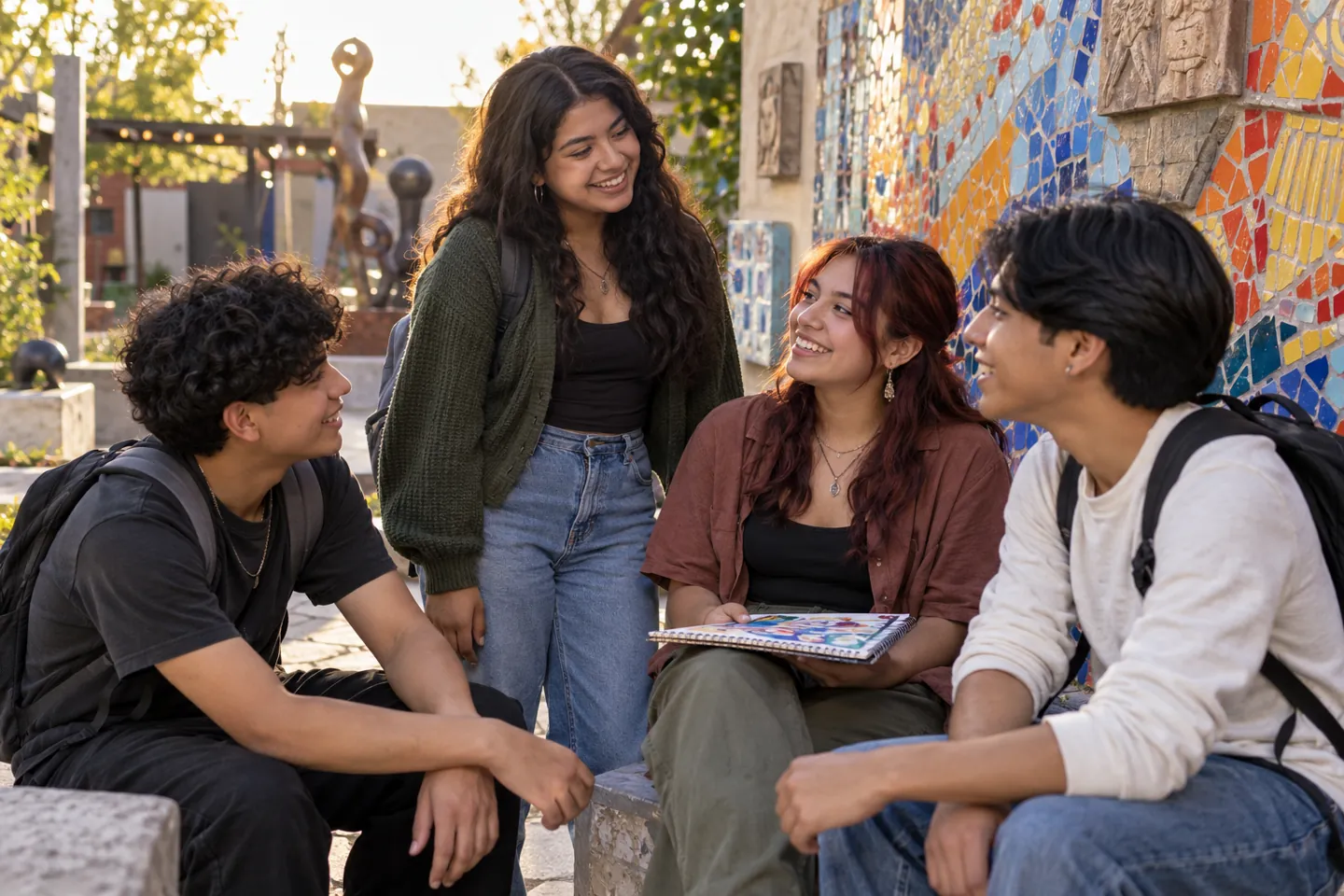
Use college conversations to describe what belonging looks like
Ask the student to name a place where they feel welcome. What happens there? Someone may pronounce their name correctly, explain an unfamiliar task, invite them into a group, or notice when they need help. Those examples make a broad feeling easier to discuss.
The CDC’s school-connectedness overview describes feeling cared for and supported by adults and peers at school. That school-based idea can help frame a conversation. It does not prove that a particular college will provide the same experience.
Next, turn one example into a question you can verify. If accessible help matters, ask how students reach an adviser or tutoring service. This campus support comparison guide can help you move from a family conversation to checking a real service.
Try prompts that invite listening instead of pressure
Choose one prompt from this table rather than asking every question at once. The listening response is an example, not a required script. Change it to sound like your family, and ask permission before taking notes.
| Conversation prompt | Possible listening response | Small next step |
|---|---|---|
| Where do you feel most like yourself? | What makes that place feel welcoming? | Name one feature to look for in a learning setting. |
| What do you want to keep close as your plans change? | Tell me what matters about that connection. | Discuss one way to stay connected. |
| What part of college feels unfamiliar? | We can learn that part together. | Write one question for a counselor. |
| What kind of help would feel useful? | Would you like listening, research, or a practical hand? | Agree on one role for the adult. |
If the conversation turns toward deadlines or costs, save those questions for a separate planning session. The Latino-family college-planning article covers that practical step. Today, focus on understanding what the student wants support with.

Let adults share experience without choosing the path
A parent, grandparent, sibling, caregiver, or trusted adult can share something they learned about education or work. Keep the story connected to the student’s question. Avoid using a personal experience as proof that the student must make the same choice.
For example: “I found it hard to ask for help when I started a new job. What would make asking easier for you?” Then listen. The student might want an introduction, a clear email example, or time to think before responding.
If no one in the family knows the college process, that does not end the conversation. Use these help-seeking ideas to identify someone who can answer a specific question. You can also explore College Board’s family resources together without pretending to know every answer.
Keep college conversations open when views differ
Families may disagree about moving away, paying for school, working while studying, or choosing a field. Name the question without deciding who is right. For example: “We have different ideas about distance from home. What information would help us understand the options?”
Next, separate a value from a detail you can research. Staying close to family is a value. A campus’s travel time is a detail. Both matter, but they need different kinds of discussion.
Pause if the conversation becomes too tense to be useful. Agree on a better time, or invite a trusted counselor into a future discussion. This weekly planning routine can help you keep practical questions manageable. One conversation does not need to settle every choice.
Start a Trekker conversation with one simple question
Try this original Trekker exercise: ask, “What would help you feel supported while exploring your future?” Give the student time to answer. Then ask one follow-up that helps you understand, such as “What would that help look like this week?”
Finish by choosing one action together. An adult might find a counselor’s contact information while the student writes the question. Or the next step might simply be another conversation after the student has had time to reflect.
Visit the iLevelUP student page, choose one prompt, and set aside a few quiet minutes. College conversations can stay open as interests change. A useful first step is understanding the person before researching the pathway.
Frequently asked questions
How do we start college conversations during Hispanic Heritage Month?
Start with one open question about identity, support, or the student’s hopes. Let the student choose what to share. The official heritage-month site offers cultural background, while the prompts in this article offer an original listening exercise.
Do all Hispanic or Latino families approach college the same way?
No. Ask about your student’s experience instead of assuming a shared set of values or needs. College Board’s family-fit resources can help you explore individual goals and preferences.
What if our family has no college experience?
You can listen, help organize questions, and identify someone who knows the process. You do not need every answer before starting. This first-generation family FAQ explains why program definitions can vary.
How can we discuss belonging without relying on a campus slogan?
Name a concrete need, then check how the college responds. Ask about a specific office, service, or process. Use the campus support guide to turn a feeling into questions you can investigate.
Can a grandparent, sibling, or mentor join college conversations?
Yes, if the student welcomes that person. Agree on whether the adult will listen, research, or help with a next step. These supportive-adult prompts can help keep the student involved.
What should we do after a family conversation?
Choose one question to research or one person to contact. Keep personal notes private and ask before sharing them. This student email guide can help turn the question into a clear request.
This article fills the September 19, 2025 content-calendar entry. Resources were checked on October 12, 2026. Images are original AI-generated illustrations, not photographs of actual iLevelUP participants.